
ReadingOrton Gillingham
Why Orton Gillingham?
Orton Gillingham can be used for any student struggling to read, no matter their age or skill set. Skills addressed in Orton lessons include:
Letter Name and Sound Recognition
Letter Formation
Decoding (Reading)
Encoding (Spelling)
Phonological Awareness (Identifying and manipulating units of oral language – parts such as words, syllables, and onsets and rimes)
Phonemic Awareness (The ability to focus on and manipulate individual sounds in spoken words)
Reading Fluency
Reading Comprehension
Morphology (Understanding base words, prefixes, and suffixes)
Written Expression
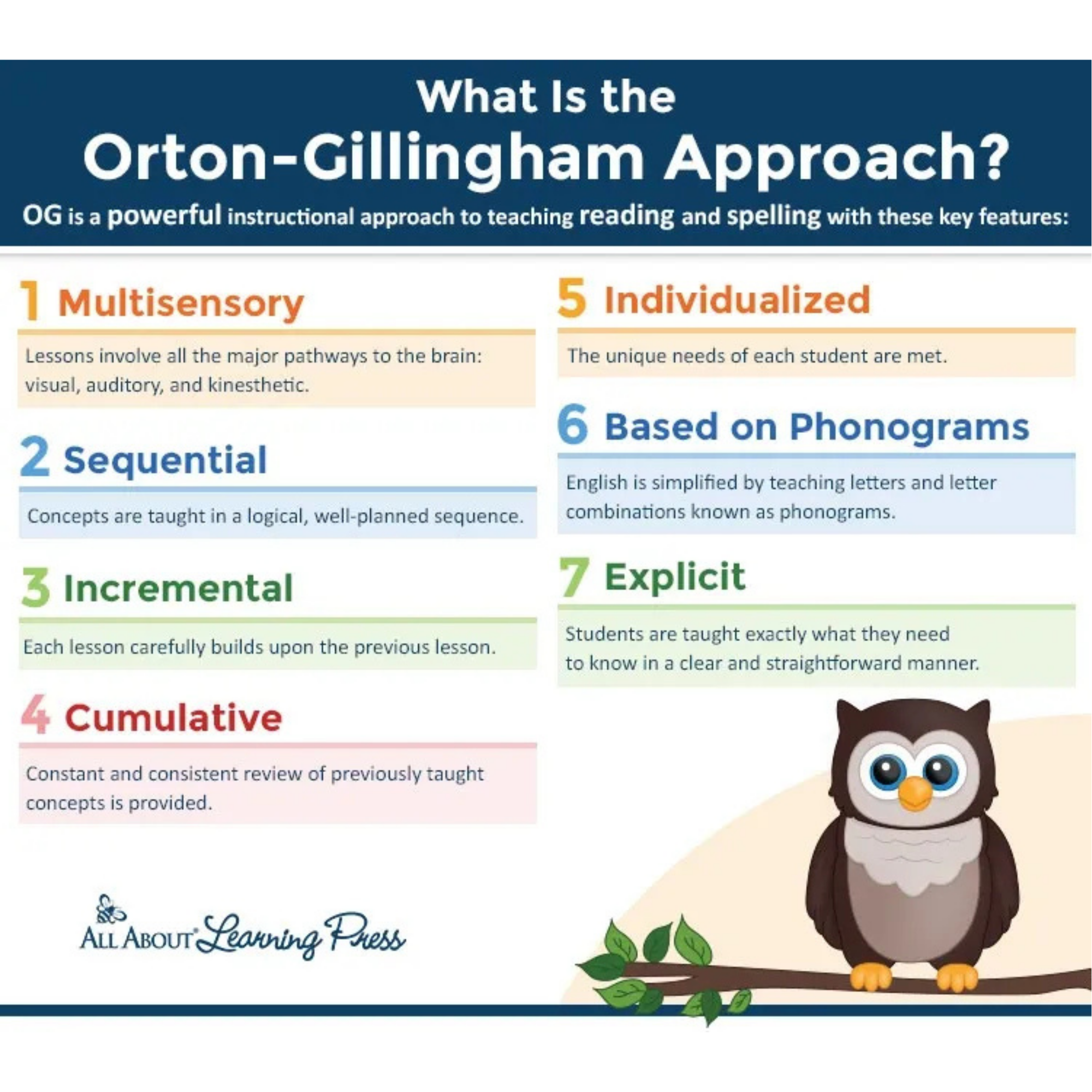
By encouraging students to master reading and language skills in an individualized way, students play an essential role in their learning.
The Orton-Gillingham Approach sees the student as an individual.
Orton-Gillingham implements a multisensory approach to reading
Orton-Gillingham can combine sight, hearing, touch, and movement into everyday instruction to help students understand the relationship between letters, sounds, and words.
The Orton-Gillingham Approach breaks down reading into smaller, more manageable skills that build on each other so students achieve mastery on their own timeline.
The Orton-Gillingham Approach breaks down reading into smaller skills.
Learning to ReadSTAGE 0: pre-reading/reading readiness ages birth to 6
Rapid oral language development; development of phonemic awareness skills (i.e., rhyming, sound manipulation); awareness of language as a communication tool; alphabet recognition and skills; environmental print recognition; “pretend” reading. Comprehension is addressed mainly through oral readings.
STAGE 1: initial reading or decoding age 6-7, grades 1-2
Utilization of sound/symbol relationships of vowels and consonants to sound out CVC words (hot, wet, flag, bent); emphasis on phonics skills to sound out new words; application of beginning spelling patterns; increased phonetic skill development. Recognition of basic sight words.

STAGE 2: confirmation and fluency age 7-8, grades 2-3
Application of phonetic and non-phonetic reading skills to new and unfamiliar words; decoding practice to develop fluency (no longer need to sound out most words); encoding (spelling) skills expanded to include spelling rules and generalizations.
STAGE 3: Reading to learn the new
By this time, the learner has transitioned to a stage where he or she is expected to learn from their reading. Students should be taught specific comprehension strategies, such as comprehension monitoring, using graphic and semantic organizers, answering questions, generating questions, recognizing textual structures, summarizing, and identifying main ideas and important details.
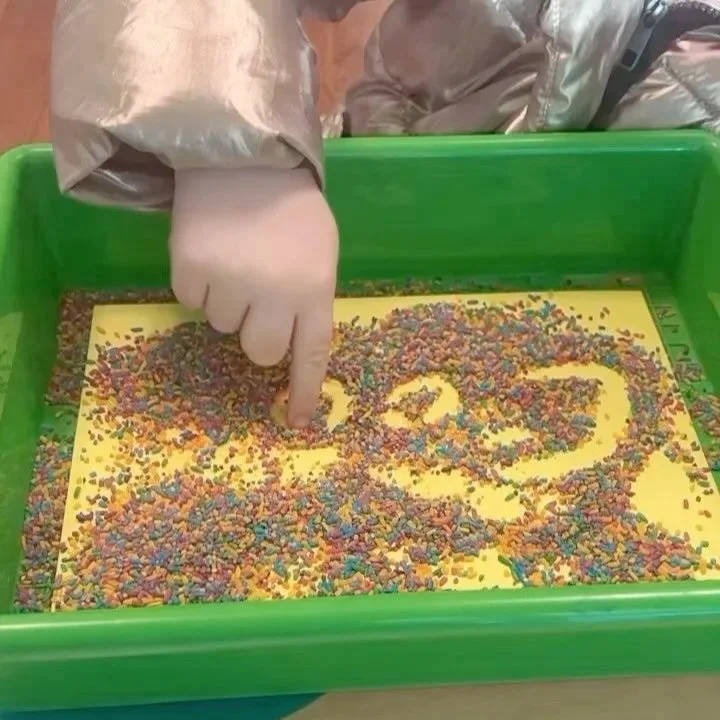
Multisensory StrategiesThe sand tray is a multisensory component that is highly encouraged for instruction.
We use the sand tray in the auditory drill, and when introducing a new skill/sound.
The sand tray ignites multiple learning pathways in the brain.
When students write sounds in the sand tray, they have a higher chance of retaining the information.

Understanding that words are made up of sequences of individual sounds, or phonemes, are a building block for learning to decode, or sound out, individual words. Two important abilities that students must develop are blending and segmenting.
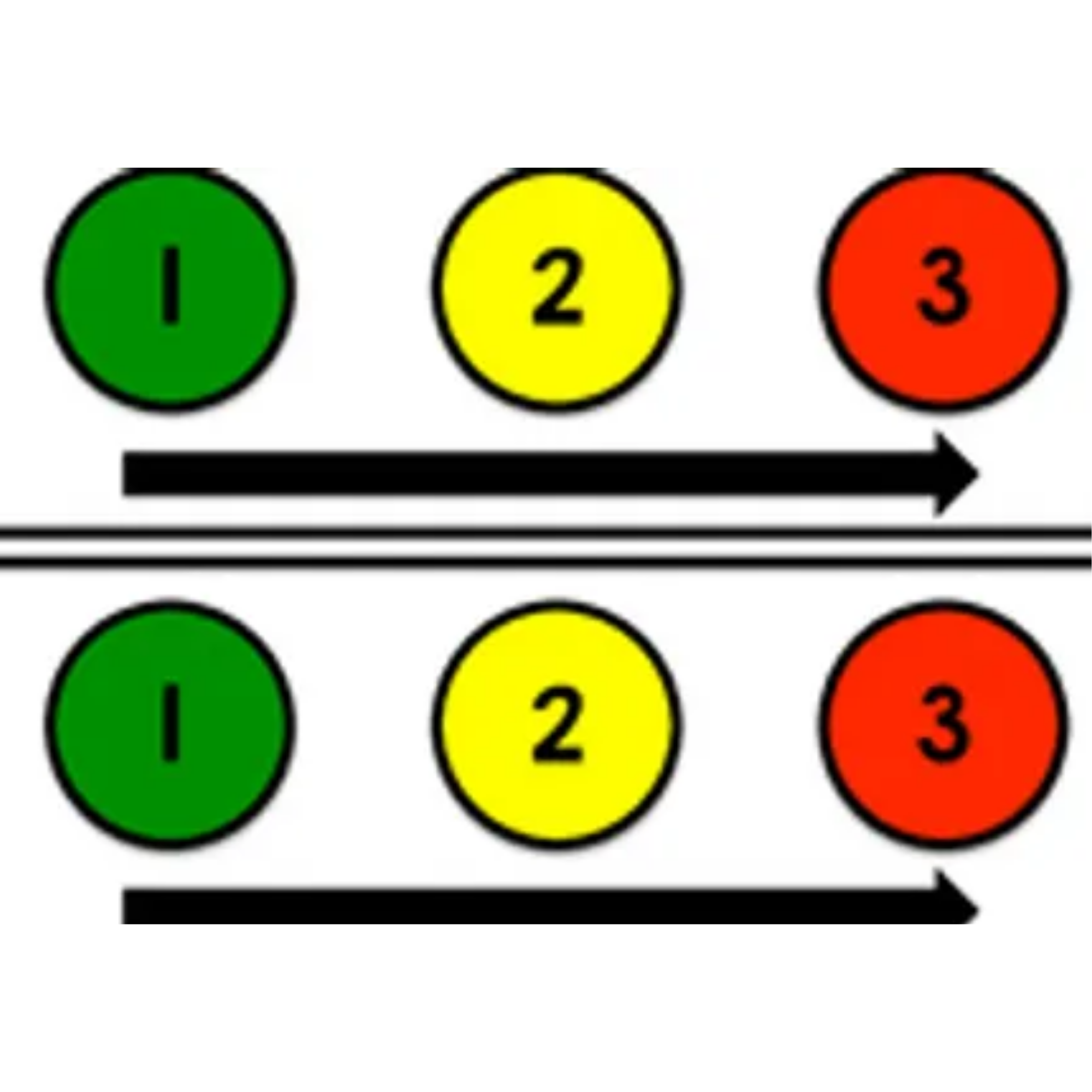
Spelling is just as important as reading. Strengthening spelling will also help strengthen reading. Many times, students are stronger readers than spellers. After a sound or skill is introduced using a multisensory approach, we directly apply the skill by spelling words containing the new skill. Students spell words by using the pound and finger tap strategy.
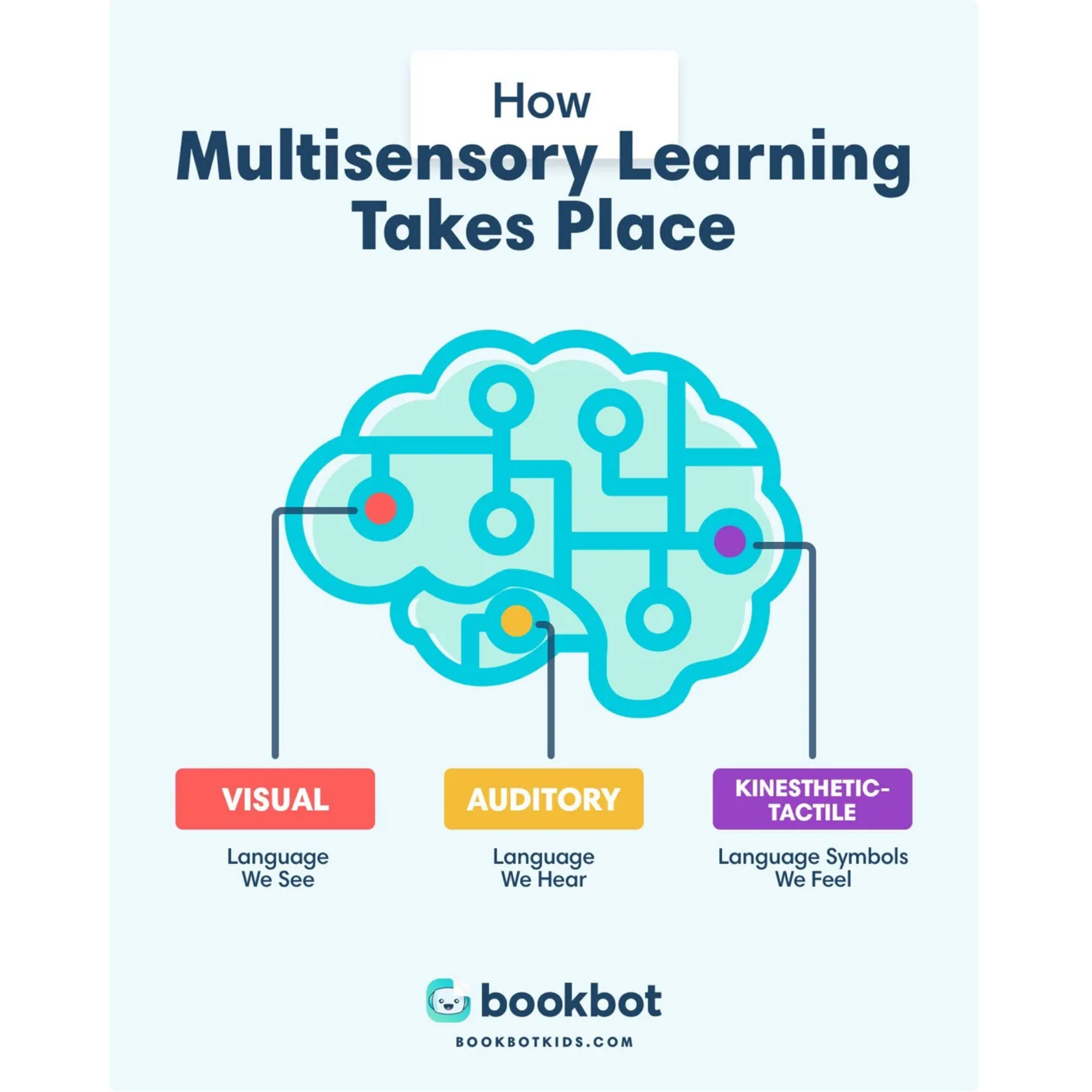
Multi-sensory teaching techniques stimulate the brain in a variety of ways so that each sensory system becomes more developed and higher functioning. This improves essential functions of the brain, such as listening skills, movement, vision, tactile recognition, and conceptualization.